March brings budding life to the garden—and a parade of pests eager to crash the party. As someone who’s faced off with aphid armies and midnight cutworm raids (RIP, my first broccoli seedlings), I’ve learned that early action is the key to a thriving spring garden. Let’s skip the chemical warfare and focus on organic, planet-friendly solutions that work.
Here’s the scoop: pests like aphids, flea beetles, and slugs thrive in March’s damp coolness. But with simple tricks—like row covers or garlic spray—you can stop them cold. For example, a companion planting garlic with carrots confuses carrot rust flies. At the same time, a dawn patrol helps catch slugs red-handed (or slime-handed).
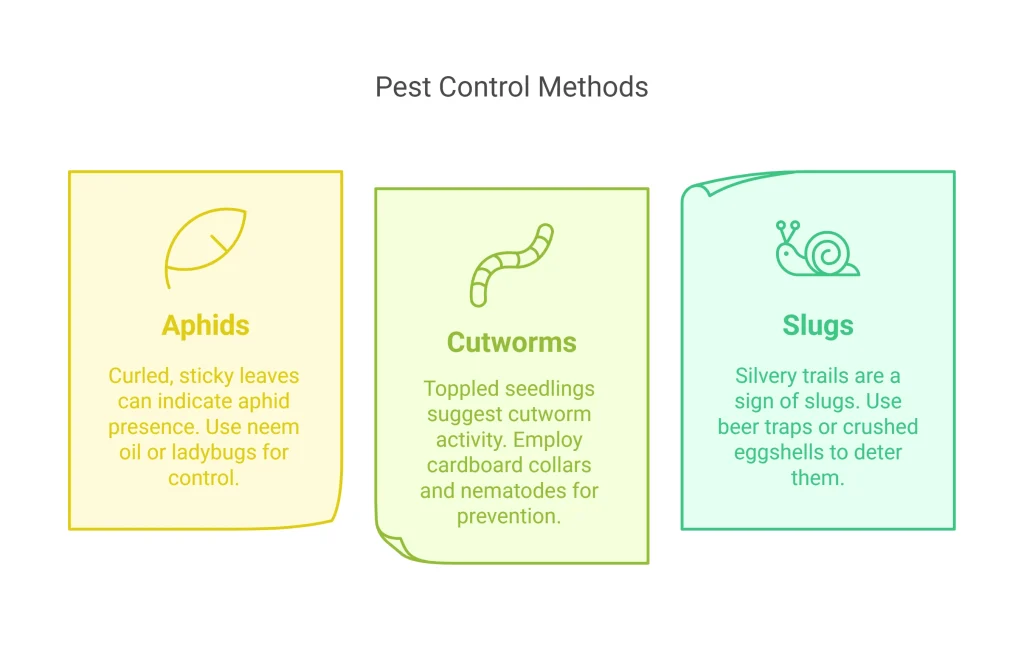
(Sources: Savvy Gardening, Big Blog of Gardening)
This guide is all about prevention, not pesticides. We’ll cover how to spot pests early, use homemade sprays, and build resilience with permaculture principles. Let’s dig in—your garden (and the bees) will thank you!
Common March Garden Pests to Watch For
March is like Grand Central Station for garden pests—they’re all scrambling to set up shop in your tender seedlings. Over the years, I’ve narrowed the usual suspects to several troublemakers. Let’s meet them (so you can evict them):
The Usual Suspects
Here’s a quick rundown of who’s lurking and what they’re after:
| Pest | Target Plants | Early Warning Signs |
| Aphids | Roses, kale, peppers | Sticky residue, curled leaves |
| Flea Beetles | Eggplant, radishes | Tiny holes resembling buckshot |
| Cutworms | Tomatoes, cabbage | Seedlings toppled overnight |
| Slugs | Hostas, lettuce | Silvery trails, ragged leaf edges |
| Carrot Rust Fly | Carrots, parsley | Rust-colored tunnels in roots |
(Data sources: Savvy Gardening, Big Blog of Gardening)
Why March? Calm, damp weather gives these pests the perfect cover to multiply before beneficial insects like ladybugs wake up. That’s why early detection is non-negotiable. Last spring, I spotted aphids on my broad bean — it turns out pests are early risers, too!
Pro Tip: Pair pest patrols with your morning coffee. Focus on:
- Undersides of leaves (aphid hideouts),
- Soil around seedlings (cutworm HQ),
- Shady, damp spots (slug rave zones).
If you’re new to organic pest control, start with barrier methods like floating row covers (reusable and foolproof). For persistent infestations, try companion planting—I swear by marigolds to repel nematodes and nasturtiums as aphid bait.
Aphid Infestation: Spotting and Stopping Sap-Sucking Pests
Aphids are the uninvited guests of the gardening world—they show up early, multiply fast, and suck the life out of your plants. With a few organic tactics, you can send these pests packing without harming your garden’s ecosystem.

Pro Tip: Check plants weekly, especially after rain. Aphids love tender shoots, so focus on kale, roses, and pepper seedlings.
Organic Aphid Control: What Actually Works
I’ve tested countless methods—here’s the shortlist of proven fixes:
| Remedy | How It Works | Best For |
| Neem Oil | Disrupts feeding | Heavy infestations |
| Ladybugs | 1 ladybug = 50 aphids/day | Preventive care |
| Garlic Spray | Repels with a strong scent | Early-stage issues |
| Blast Them | Hose off with water | Mild cases |
(Sources: Farmpays, Big Blog of Gardening)
My Go-To Routine:
- Spray at dawn with a homemade garlic spray (1 minced garlic + 1 quart water).
- Release ladybugs (order online!) in the evening—they’ll feast overnight.
- For stubborn cases, apply neem oil every 5 days (but spare the pollinators—avoid flowering hours!).
Prevention Wins:
- Attract beneficial insects like lacewings by planting dill or yarrow (pollinator-friendly guide).
- Avoid over-fertilizing—aphids adore nitrogen-rich plants. Stick to slow-release compost.
Aphid Myth Buster:
“Aphids only attack weak plants.” Nope—they’ll mob healthy ones too! Vigilance is key.
Flea Beetles: Protecting Seedlings from Jumpy Leaf-Munchers
Flea beetles are the ninjas of the garden—tiny, lightning-fast, and obsessed with turning your seedlings into Swiss cheese. I learned this the hard way when my eggplant starts looked like they’d survived a BB gun battle. But don’t despair! These pests might be sneaky, but with a few organic hacks, you can shield your plants and keep your sanity intact.

Pro Tip: They’re worst in early spring when seedlings are tender. Check plants on sunny afternoons—they’re most active when it’s warm!
Organic Control: Outsmarting the Jump Squad
I’ve battled flea beetles for years—here’s what actually works:
| Solution | How to Use | It Best For |
| Kaolin Clay | Dust leaves to repel | Early infestations |
| Trap Crops | Plant radishes nearby | Lure beetles away |
| Row Covers | Install at planting | Full protection |
| Garlic Spray | Apply weekly | Deterrent |
(Sources: Homes & Gardens, Big Blog of Gardening)
My Battle Plan:
- Pre-empt with row covers — they’re a physical barrier that keeps the soil warm.
- Distract them with trap crops like radishes. Sacrifice a few to save the rest!
- Mix kaolin clay with water (follow label instructions) and spray leaves. It’s like sunscreen for plants—pests hate it!
Prevention Pro Tip:
- Boost soil health with compost (no-dig gardening method)—strong plants resist damage better.
- Stagger planting times to avoid peak beetle season.
Why This Works: Flea beetles thrive on stress. Healthy plants and smart barriers encourage them to move on to easier targets.
Cutworms: Nighttime Seedling Assassins
Cutworms are the ultimate garden ninjas—sneaky, soil-level, and ruthless. These pests don’t just nibble; they decapitate. But with a few simple organic tricks, you can shield your plants and sleep soundly.
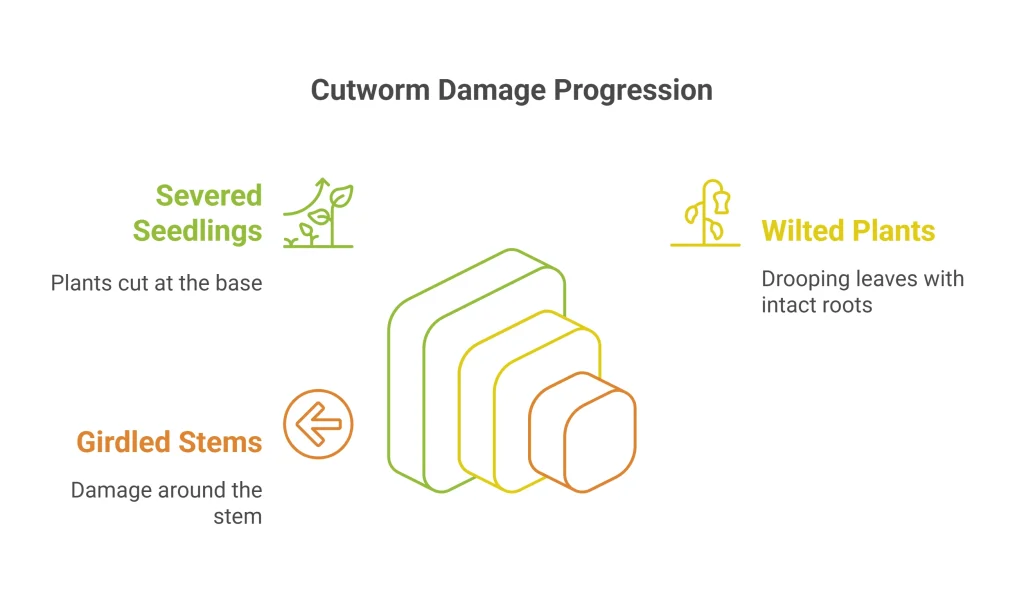
Pro Tip: They strike at night, so grab a flashlight for dusk patrols. Focus on tomatoes, cabbage, and kale—their favorite buffets.
Organic Defense: Foiling the Midnight Marauders
After years of cutworm battles, here’s my foolproof game plan:
| Defense Tactic | How It Works | Best For |
| Cardboard Collars | Wrap stems (toothpaste tubes work!) | New transplants |
| Diatomaceous Earth | Sprinkle around plants | Dry evenings |
| Beneficial Nematodes | Water into soil | Preventative care |
| Hand-Picking | Hunt at dusk with a flashlight | Small infestations |
(Sources: Savvy Gardening, UCANR)
My Nightshift Routine:
- DIY collars: Cut toilet paper rolls in half and slide them over seedlings at planting time.
- Release nematodes in damp soil—they’re microscopic cutworm assassins.
Cutworm Myth Buster:
“They only attack weak plants.” Nope! They’re equal-opportunity destroyers. Even your healthiest seedlings aren’t safe.
Pro Tip: Pair collars with healthy compost to boost seedling resilience. Strong plants can recover from minor damage!
Carrot Rust Fly: Underground Sabotage and How to Stop It
Carrot rust flies are the silent assassins of the root veggie world. But don’t let these pests steal your harvest! With organic strategies, you can outsmart them and grow flawless carrots, parsnips, and parsley.

Pro Tip: Damage often isn’t visible until harvest. Prevention is your only defense!
Organic Prevention: Foiling the Underground Raiders
After trial and error (and a few inedible carrot batches), here’s my foolproof tactic list:
| Solution | How It Works | Best For |
| Row Covers | Block egg-laying flies | Entire growing season |
| Companion Planting | Grow onions/garlic nearby | Confuse adult flies |
| Crop Rotation | Move crops yearly | Break pest cycles |
| Nematodes | Apply to the soil to kill larvae | Early spring |
(Sources: Farmpays, Savvy Gardening)
My Winning Routine:
- Cover crops ASAP with floating row covers secured at the edges—adult flies can’t penetrate!
- Plant garlic or chives between carrot rows. The strong scent masks your crops (companion planting guide).
- Rotate beds yearly—never plant carrots in the same spot twice.
Pro Tip:
- Avoid thinning carrots on sunny days—the smell attracts flies. Do it on cloudy evenings instead!
- Try resistant varieties like ‘Flyaway’ carrots, which are bred to deter rust flies.
Myth Buster:
“Rust flies only attack carrots.” Nope! They’ll also target celery, parsley, and parsnips. Stay vigilant!
Why This Works: Carrot rust flies rely on scent and routine. Disrupt their habits with thoughtful planting and barriers, and they’ll buzz off.
Slug Control: Banishing Slimy Midnight Munchers
Slugs are the ultimate party crashers—sneaking in after dark to turn your lettuce into lace and your hostas into Swiss cheese. But with a mix of organic hacks and humor, you can reclaim your garden from these slimy saboteurs.

Pro Tip: Check damp, shady spots—under pots, rocks, or mulch—where slugs hide during the day.
Organic Slug Solutions: What Actually Works
After years of slug wars (and a few failed experiments), here’s my battle-tested arsenal:
| Solution | How It Works | Best For |
| Beer Traps | Bury a cup of beer—slugs drown | Small gardens |
| Copper Tape | Creates a repellent barrier | Raised beds/pots |
| Diatomaceous Earth | Sprinkle around plants | Dry nights |
| Hand-Picking | Collect at night with gloves | Immediate relief |
(Sources: Homes & Gardens, Savvy Gardening)
My Go-To Routine:
- Set beer traps: Use cheap lager in shallow containers (slugs have terrible taste).
- Ring plants with crushed eggshells or coffee grounds—they hate gritty textures.
- Encourage predators: Toads, birds, and ground beetles are slug-eating MVPs. Add a small pond to attract frogs!
Prevention Power Move:
- Water in the morning—dry soil at night forces slugs to work harder.
- Avoid thick mulch early in spring; opt for light straw instead.
Slug Myth Buster:
“Salt kills slugs.” True, but it also harms soil and plants. Stick to beer traps—it’s kinder (and oddly satisfying).
Pro Tip: Pair slug control with seedling nutrition tips to help damaged plants recover faster.
General Organic Prevention: Build a Pest-Resistant Garden
Let’s be honest—pests are inevitable, but a proactive garden is resilient. Over the years, I’ve shifted from reactive bug battles to prevention-first strategies that save time, money, and sanity. Think of it like building a fortress: strong walls (plants), loyal allies (beneficial insects), and a few traps for good measure.
Top 5 Organic Prevention Tactics
| Strategy | How It Works | Effort Level |
| Companion Planting | Repel pests with scent/chemistry | Low (plan ahead!) |
| Healthy Soil | Compost feeds plants, not pests | Moderate |
| Diverse Planting | Mix crops to confuse pests | Low |
| Beneficial Insects | Lacewings, ladybugs = pest hit squad | Moderate |
| Row Covers | Physically block pests | High (but worth it) |
(Sources: Regenerative gardening guide, Savvy Gardening)
My Daily Routine for a Pest-Resistant Garden:
- Morning Patrol: Coffee in one hand, inspecting leaves in the other. Focus on new growth and undersides.
- Companion Planting: Marigolds with tomatoes and basil near squash (avoid bad pairings here).
- Soil Love: Weekly compost tea feeds microbes that boost plant immunity.
Pro Tips:
- Attract predators: Plant dill, yarrow, or sunflowers to draw in ladybugs and parasitic wasps.
- Rotate crops: Never plant the same family (e.g., tomatoes/peppers) in the same spot two years in a row.
- Mulch Smart: Use straw or leaf mulch to retain moisture and discourage slugs.
Quick Fixes for Common Oversights
- Did you forget to rotate? Sprinkle cinnamon on the soil—it’s a mild antifungal and pest deterrent.
- Seedlings struggling? Boost resilience with seedling nutrition hacks.
- Overwhelmed by pests? Release beneficial nematodes—they’re like tiny pest Terminators for soil-dwelling larvae.
Final Thought: A healthy garden is a balanced ecosystem. Focus on soil health, biodiversity, and patience—it takes time for nature’s checks and balances to kick in.
Conclusion: Celebrate Your Pest-Free Garden Wins
Let’s be honest—gardening combines triumphs and “well, that didn’t work” moments. But here’s the good news: every pest problem is a chance to learn, adapt, and grow (literally and figuratively).
Your March Pest Control Checklist
| Task | Why It Matters |
| Daily Dawn Patrol | Catch pests before they multiply |
| Weekly Soil Check | Spot larvae hiding underground |
| Companion Planting | Confuse pests naturally |
| Journal Progress | Track what works for next year |
Remember:
- Small wins count. Saved one seedling from cutworms? That’s a victory.
- Share the struggle. Swap tips with fellow gardeners—it’s how I discovered beer traps for slugs!
- Embrace imperfection. Even my “best” garden had a few flea beetle holes. Pollinators didn’t mind.
Final Thought: Gardening isn’t about perfection—it’s about progress. Celebrate the ladybugs that moved in, the carrots that survived rust flies, and the fact that you’re growing organically. That’s a win for you and the planet.
Now, over to you: What’s your biggest March pest challenge? Share in the comments—let’s troubleshoot together!
FAQ: Your Top Prevention Questions
Try: Garlic (aphids), nasturtiums (cabbage worms), mint (ants).
Answer: At least twice a week in early spring—dawn or dusk is prime pest o’clock.
Yes, but: Test on one leaf first. Even neem oil can stress plants in direct sun.